
Adult pleasure guide
Excellent cunnilingus is not a secret tongue trick. It is a collaboration: invite, listen, explore, stay curious, and let the person receiving set the pace.
There is a particular kind of performance anxiety around going down on someone. People imagine they are supposed to arrive with legendary technique, supernatural stamina, and a move so potent it belongs under lock and key. The truth is both less theatrical and much more useful: the best giving partner is teachable.
Cunnilingus means oral contact with the clitoris, vulva, or vaginal opening.[12] A person with a vulva may be a woman, a man, nonbinary, intersex, or use another identity. This article uses receiver for the person receiving and giver for the person giving, while recognizing that roles can change. If you searched for how to “eat out a woman,” the same inclusive rule applies: learn the individual adult and use the words they choose for their body.
Confidence can be sexy; certainty about another person’s body is not. Bodies, sensation, mobility, history, mood, and preferences differ. A large U.S. survey of women found diverse preferences for where and how genital touch happened, including location, pressure, shape, and pattern.[3] That supports variety, not a universal recipe—and the study should not be generalized to every person with a vulva.
Before Your Mouth Goes Anywhere, Get on the Same Page
Make the invitation easy to accept—or decline
Good oral begins before contact. Try an invitation: “I’d love to go down on you. Want that?” A yes can be quiet, signed, spoken through an AAC device, or expressed with another agreed signal; enthusiasm does not need to be loud. What matters is that the answer is voluntary and understood. Consent should never be assumed and can be withdrawn at any time.[1]
A yes to oral contact is not a yes to fingers, vaginal penetration, toys, anal contact, restraint, recording, or barrier-free sex. Ask separately before adding anything. A relationship label, previous sex, flirting, nudity, physical arousal, lubrication, body movement, sounds, orgasm, silence, or lack of resistance does not independently establish consent. If a person freezes, pulls away, becomes distressed, uses a stop signal, or seems unable to decide, stop and check in.
Keep questions answerable. “More pressure or less?” is kinder than “Tell me everything you want.” “Would you like direct touch, touch around the area, or both?” makes choice easier. So do: “Oral only, or would you like my hand involved?” and “Would a barrier feel right tonight?” The conversation can be flirtatious and brief; clarity is not the enemy of chemistry.
Talk about comfort, language, and boundaries
Ask which words the receiver wants used for their anatomy. Some prefer vulva, clitoris, or vagina; others use genitals, front hole, or personal language. Mirroring their terms can reduce dysphoria and help the encounter feel like it belongs to them. Current anatomy and behavior—not gender assumptions—should also guide sexual-health conversations.[11]
Useful pre-play questions include: Are any areas sore, numb, sensitive, or off-limits? Is there a position that supports the receiver’s hips, back, breathing, or mobility? Are there scars, sensory needs, trauma triggers, or dysphoria concerns to respect? Would the receiver rather guide with words, a hand, taps, signs, or a device? Agreeing that one squeeze means “same,” two taps mean “pause,” and pushing away means “stop” can make communication easier when speaking is inconvenient.
Do not turn comfort into an inspection. Natural scent, taste, discharge, pubic hair, skin tone, scars, labia shape, hormonal change, and menstruation are not grades. A shared shower can be foreplay if both want it; it is not an entrance exam. Never demand douching, perfume, steaming, scrubbing, or hair removal.
Set up the room so bodies can relax
A little logistics protects the mood. Have privacy, enough time, water, pillows, a comfortable temperature, lubricant, and any chosen barrier nearby. If hands may join in, clean them and smooth rough nail edges. Put phones away unless they are communication or accessibility tools. None of this needs to resemble a luxury hotel; it simply reduces interruption and strain.
Make stopping physically easy. The receiver should not feel pinned, and the giver needs room to breathe and move away. If a position puts weight near the giver’s face or chest, agree on an immediate signal and keep the airway unobstructed. A pause for a pillow, a drink, or a new angle is not a failed performance. Comfort is part of technique.

Know the Landscape Without Treating It Like a Control Panel
Vulva and vagina are not interchangeable words
The vulva is the external genital area. It includes the outer and inner labia, clitoral glans and hood, the vestibule around the urethral and vaginal openings, and nearby tissue. The vagina is the internal canal. Cunnilingus can involve the whole external landscape; it does not have to be a prelude to penetration, and penetration is never required.
The visible clitoral glans sits near the top of the vulva and is often partly covered by the hood. The clitoris also has internal erectile structures; it is much more than the visible portion. It is highly sensitive, but “highly sensitive” is not an instruction to apply intense direct contact. What feels best varies from person to person.[2] Direct contact may be delicious, overwhelming, irritating, neutral, or unwelcome. The receiver’s report is the authority.
Variation is normal; asking is practical
Some people enjoy attention around the hood or labia before anything focused. Some want firm, direct clitoral contact immediately and find teasing frustrating. Some enjoy the vaginal opening, mons, inner thighs, or an area that does not feature in glossy advice columns. Sensation can also change with arousal, hormones, medication, disability, surgery, fatigue, stress, pain, and mood. These possibilities are not diagnoses; they are reasons to avoid assumptions.
Post-surgical anatomy may have different sensation, scarring, lubrication needs, or healing instructions. Follow what the person knows about their body and, during recovery, the guidance of their surgical team. A body does not need to match an anatomy illustration to deserve attentive, joyful sex.
Explore, Notice, Ask, Refine
This is the practical heart of good cunnilingus, but it is a feedback loop rather than a countdown to orgasm. Explore an agreed option. Notice without pretending you can read minds. Ask a short question. Refine based on the answer. Repeat as wanted.
Build anticipation—or skip it when asked
One optional approach is to begin wider than the most sensitive spot. Kiss, breathe, or touch welcomed areas such as the hips, stomach, mons, outer labia, or inner thighs. Use a broad, soft tongue around the vulva or beside the hood. This can give the receiver time to settle into sensation and leaves room to build intensity.
But teasing is not automatically erotic. Some receivers dislike delay and prefer you to get to the point. Ask: “Want me closer?” “More direct, or keep it broad?” “Would you like me to stay here?” The sexy part is not making someone wait; it is making their preference easy to express.
Use four dials, one at a time
Rather than cycling through party tricks, imagine four adjustable dials. Change one, ask, listen, and adjust. Moving one variable at a time helps the receiver identify what changed and makes “yes, that” easier to repeat.
Broader contact around the vulva, indirect contact near the hood, or more focused external attention.
Lighter or firmer, with room to change as sensation builds.
Slower, quicker, or a pace the receiver sets.
Steady strokes, pauses, pulses, or directional movement—chosen by feedback, not folklore.
A flat tongue can offer broader contact; the tip can feel more focused. Strokes can travel vertically, horizontally, diagonally, or in circles. None of those shapes has a special universal power. Avoid treating the alphabet, a timer, or any precise sequence as a cheat code. Technique becomes relevant only when it meets a real person’s preference.
Try easy comparisons: “Softer or firmer?” “Stay there or move around?” “Slower, faster, or exactly that?” “More direct or a little to the side?” If the receiver says “same,” preserve the requested location, pressure, tempo, and pattern. When something is working, resist the impulse to audition a dazzling new trick.
Consistency is useful when it is requested
As arousal builds, some people want a stable rhythm. Sudden unrequested changes can be distracting, especially near orgasm. That does not create a rule to ignore new feedback. Sensation can become too intense; a receiver can ask for less, move your head, request a pause, or stop altogether. “Stay there” means stay with the agreed approach for now—not that consent has become permanent.
A giver may hear less feedback as the receiver focuses. Quiet can mean pleasure, concentration, self-consciousness, a communication difference, uncertainty, or something else entirely. Do not escalate merely to provoke a louder reaction. Pause for a simple check: “Still good?” The answer matters more than theatrical evidence.
Let guidance be collaborative, never coercive
If both adults agree, the receiver might demonstrate with their hand, guide pressure with their hips, place a hand over the giver’s head without pulling, or control a vibrator. Decide what those actions mean in advance. Random movement is context, not automatic consent, and head control should never prevent the giver from breathing or moving away.
Accessible communication counts. Words, sign language, AAC, gestures, eye signals, or agreed touches can all communicate yes, no, more, less, pause, and stop. The goal is not to force a conventional conversation; it is to create a channel both people understand.
Good feedback is not a mood killer. It is the map.
Hands, Toys, Positions, and the Rest of the Body
Additions are invitations, not upgrades
Hands and toys can be enjoyable, but more stimulation is not inherently better. Ask before spreading the labia, adding external pressure, introducing a vibrator, or using a finger or toy vaginally. “Want my hand too, or just my mouth?” is enough. If the answer is oral only, treat it as a complete preference—not a challenge to negotiate.
If fingers are welcome, keep nails smooth, use enough compatible lubricant, and move according to guidance. Stop for pain, abrasion, unexpected bleeding, or numbness. If a toy is welcome, follow its manufacturer’s instructions for cleaning and material compatibility, and ask separately before using it internally or with another person. Never surprise someone with penetration.
Choose positions for pleasure, breath, and access
Reclining face-up can allow pillows under the knees, hips, back, or neck. Side-lying can reduce weight-bearing and may suit people managing hip or back discomfort, fatigue, balance limits, or larger bodies. A receiver near the edge of a bed can let the giver sit or kneel at a comfortable height. Pad knees and adjust the furniture rather than treating strain as evidence of devotion.
A seated receiver or adjustable bed may work well for some mobility needs. Lock wheels on mobility equipment where appropriate, keep transfers stable, and let the person who knows their body direct setup. A receiver-on-top position can provide control of distance and pressure, but only when both want it, weight-bearing is comfortable, the lower partner can breathe freely, and an immediate stop signal is understood.
No position is mandatory. Not every giver can kneel; not every receiver can spread their legs or remain still. Jaw, neck, respiratory, chronic-pain, fatigue, sensory, or mobility considerations may make shorter intervals, side-lying, position changes, or alternating mouth and hands preferable. These are ergonomic options, not medical treatment.
Lubricant and breaks can protect the fun
Saliva can dry. A body-safe lubricant may reduce friction from fingers, toys, or a barrier; needing it says nothing negative about desire or arousal. Check the packaging when combining lubricant with barriers or toys. For latex dental dams, CDC guidance supports water- or silicone-based lubricant and warns against oil-based products because oil can damage latex.[5]
A giver is allowed to pause because their jaw or neck is tired. Take water, reposition, stretch, switch to an agreed hand or toy, move to another activity, or stop. Endurance is not a moral achievement. A comfortable giver can pay better attention than one silently pushing through pain.
Safer Sex Without Pretending Risk Is Zero
What oral sex can transmit
Oral sex can transmit sexually transmitted infections, including chlamydia, gonorrhea, syphilis, herpes, and HPV; infection may involve the mouth or throat, genitals, or more than one site.[4] CDC describes HIV risk from oral sex as little to no risk, but that does not make cunnilingus risk-free for other infections.[4] Risk also depends on the whole encounter, not one act viewed in isolation.
Oral HSV-1 can spread from the mouth to the genitals through oral sex.[6] Herpes can sometimes spread without a visible sore, so appearance cannot establish that a person has no infection. Syphilis can spread through direct contact with a sore during oral sex, and sores may be painless or easy to miss.[7] Gonorrhea can infect the throat or genitals and often causes no symptoms.[8]
Do not use “clean” to mean STI-negative. It stigmatizes infection and overstates what anyone knows. A person may have no symptoms, may be between tests, or may not have been tested at every exposed body site. A recent negative result is useful information, not moral proof or a guarantee about every infection.
Dental dams: a practical barrier option
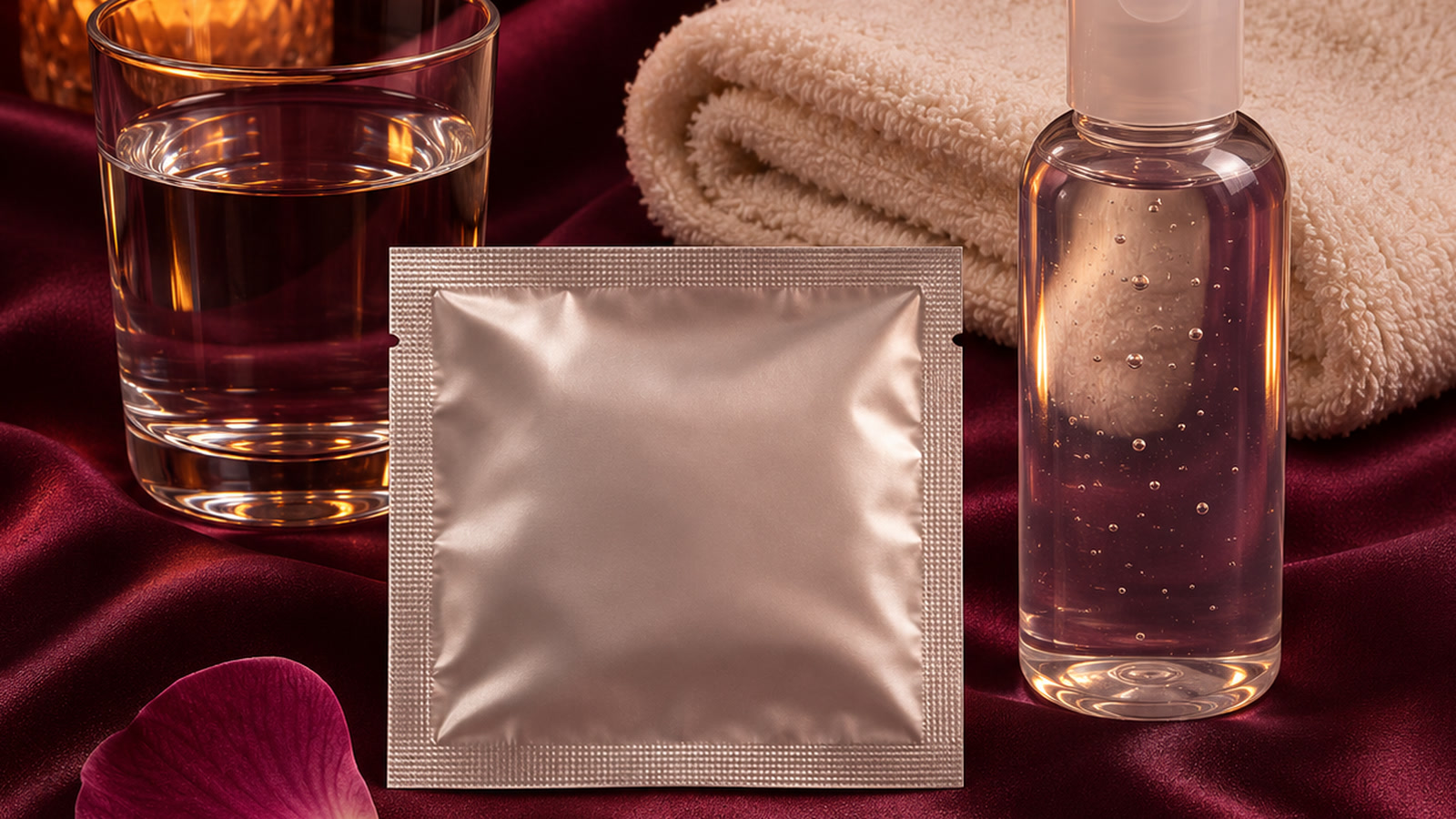
A dental dam is a latex or polyurethane sheet placed between the mouth and vulva or anus. Use a new dam each time. Check its expiration date and packaging, inspect it for damage, place it before oral contact, and keep it in place until finished. Lay it flat rather than stretching it, because stretching can cause tearing. Do not reuse it.[5]
A condom can be cut open lengthwise to create a rectangular barrier. Use water- or silicone-based lubricant with latex to help prevent breakage.[5] Avoid oil-based products with latex, and do not use nonoxynol-9 because it can irritate tissue. If latex allergy is a concern, select a polyurethane or other product explicitly labeled for the intended use.[5]
Barriers are tools, not judgments. Discuss whether one fits your shared risk preferences. Experiences of sensation vary; trying different positioning or adding compatible lubricant may help. A barrier is not a reason to ignore symptoms, active lesions, or a request to stop.
Sores, blood, bleeding gums, and dental work
CDC lists bleeding gums and mouth or genital sores as possible factors in oral-STI transmission, but studies have not established whether those factors increase oral-STI risk.[4] That uncertainty does not support a universal rule or invented percentage. Ordinary menstruation is not automatically a medical reason to avoid oral sex; adults can discuss comfort, barriers, and their own risk preferences.
There is no evidence-backed universal waiting period after dental work. Follow the treating professional’s aftercare instructions, and ask that professional if you are unsure when sexual mouth contact fits your recovery. A barrier reduces direct contact but should not be presented as making an active lesion harmless.
Keep up ordinary brushing and flossing for oral health. Do not treat a harsh last-minute routine as a way to “sterilize” the mouth: CDC identifies bleeding gums as a possible factor but says studies have not established how much the factor changes oral-STI risk.[4]
Hygiene without shame or douching
The vagina does not need internal washing before cunnilingus. The U.S. Office on Women’s Health distinguishes douching from washing the external area and warns that douching can cause health problems.[13] If desired, rinse the external vulva with warm water or use a gentle, unscented product already known to be tolerated. Do not scrub, steam, perfume, or demand a neutral scent.
Menstruation, body fluids, hair, and natural scent are preference conversations. Adults can choose a barrier, a towel, washing for mutual comfort, another activity, or no sexual activity without insulting anyone’s body.
Testing, vaccination, and a grown-up risk conversation
Talk about when each person was last tested, which infections and body sites were included, any exposures since then, current symptoms, known exposure, vaccination status, and whether barriers are wanted. Testing recommendations vary with anatomy, age, sexual practices, symptoms, pregnancy, exposures, and local factors. Avoid a one-size-fits-all schedule.
Tell a clinician about oral exposure and ask which sites should be tested. CDC specifically advises people who have had oral sex to discuss throat-testing options with a healthcare provider.[10] A urine, genital, or blood sample may not answer whether a throat infection is present.[10] Screening should follow current anatomy and behavior rather than assumptions about identity.[11]
HPV vaccination prevents new HPV infections; it does not treat an infection already present. CDC recommends vaccination through age 26 for people not adequately vaccinated earlier, while some adults ages 27 through 45 may decide on vaccination after discussion with a clinician.[9] Ask a healthcare professional about eligibility and current guidance.
Know When to Stop and When to Seek Care
Stop immediately and check in
Stop oral contact for pain, sharp burning, numbness, unexpected bleeding, a torn barrier, breathing difficulty, panic, dissociation, freezing, withdrawal of consent, or any agreed stop signal. Do not push through pain to reach a performance goal. Move to safety and comfort, ask what the person needs, and do not restart unless there is a clear, voluntary new agreement.
Herpes lesions can occur around the mouth or genitals, and oral HSV-1 can spread to genitals.[6] Syphilis sores can be painless and overlooked.[7] Gonorrhea and other oral infections may cause no symptoms.[8] Visual inspection is not a test.
Seek urgent help for severe symptoms
Seek urgent medical care for severe or worsening pelvic pain—especially with heavy bleeding, fainting, or difficulty breathing. NHS urgent-care guidance lists those combinations as reasons for emergency assessment.[14]
For other severe, rapidly worsening, or life-threatening symptoms, use local emergency services. If contact was nonconsensual, prioritize immediate safety and access to a sexual-assault service or emergency care. Support the person’s choices; do not pressure them to report or disclose more than they want.
For less urgent but persistent pain, irritation, altered sensation, or a concerning change, a qualified clinician can assess the individual situation. Do not rely on an article, partner, chatbot, or photo to diagnose symptoms.
Pleasure Is Not a Performance Review
Orgasm is an option, not the assignment
The receiver may enjoy every second and not orgasm. They may become very sensitive, lose interest, want to switch activities, or decide they are done. None of those outcomes proves the giver failed. Pressure to climax can turn pleasure into labor, and pushing for “just one more minute” after a stop is not persistence—it is ignoring consent.
Arousal and sensation can shift for many reasons, including fatigue, stress, distraction, medication, hormonal changes, pain, trauma history, or ordinary variation. This list is illustrative, not diagnostic. Nobody needs to explain or justify a change of mind.
Receive feedback without making it about your ego
If a receiver says “softer,” the useful response is to soften—not to demand reassurance that you were not doing badly. Try “Thanks—like this?” If they move your mouth slightly to the left, treat that as collaboration. If something once beloved feels wrong tonight, believe the current answer. Remembered preferences are clues, not standing permission.
Oral play can pause, end, or turn into cuddling, solo touch, conversation, sleep, laughter, or another mutually desired activity. None is inherently a downgrade. The goal is not to make a body produce a result. The goal is to create space where pleasure can be noticed, requested, changed, and stopped.

Aftercare and the Conversation That Helps Next Time
Check in without requesting a five-star review
Afterward, ask what would feel good now: water, a bathroom break, closeness, food, space, quiet, reassurance, or something else. Aftercare is individualized. Cuddling is not universally soothing, and space is not rejection. Follow the answer.
Later, when nobody is in the vulnerable middle of sex, try three questions: “What did you especially like?” “Was anything too much, too little, or uncomfortable?” “Anything you want to try—or skip—next time?” Treat answers as shared information, not a grade.
Excellent cunnilingus is attention with a sense of play. Invite. Explore. Notice. Ask. Stay steady when asked; change when asked. Make comfort ordinary and safer-sex planning matter-of-fact. The receiver’s preferences outrank every guide—including this one.
Frequently Asked Questions
Is there one cunnilingus technique most people prefer?
No. Touch preferences vary widely.[2][3] Asking, changing one variable at a time, and responding to feedback are more reliable than assuming a motion, pressure, speed, or sequence is universal.
How do I know whether my partner is enjoying it?
Ask. Sounds, movement, lubrication, stillness, and orgasm can provide context but do not establish consent or tell you exactly what someone wants. “Like this?” and “Want any change?” are clearer.
What if the receiver does not orgasm?
Do not treat it as failure or press for a result. Ask whether they want to continue, change activities, or stop. Pleasure without orgasm can be satisfying, and nobody owes a climax.
Should I use my hands or a toy too?
Only if the receiver wants that. Ask before adding external hand stimulation, penetration, or a toy. Combination techniques are options, not upgrades, and oral-only is a complete choice.
Do dental dams eliminate STI risk?
No barrier removes all risk.[4] Dental dams can reduce direct contact; use a new one, inspect it, avoid stretching, keep it in place, and follow lubricant compatibility guidance.[5]
What if my jaw or neck gets tired?
Pause, reposition, use pillows, switch to another mutually wanted activity, or stop. Discomfort is a reason to adjust, not a challenge to conquer.
How should we handle taste, scent, hair, or menstruation?
With respect and direct conversation. Bodies vary. Choose washing for mutual comfort, a barrier, a towel, another activity, or no activity—without shaming. Do not douche.[13]
What if touch is painful or suddenly feels wrong?
Stop or pause immediately. If pain, irritation, bleeding, altered sensation, or another concerning change persists or worsens, seek appropriate clinical care. This article cannot determine the cause.
Does what worked last time automatically work next time?
No. Desire, sensitivity, comfort, and boundaries can change. Remembering is considerate; checking again is better. Past enjoyment is never permanent consent.
Sources
- [1] https://www.devonsexualhealth.nhs.uk/your-sexual-health/consent — Consent | Devon Sexual Health
- [2] https://my.clevelandclinic.org/health/body/22823-clitoris — Clitoris: Anatomy, Location, Purpose & Conditions
- [3] https://pubmed.ncbi.nlm.nih.gov/28678639 — Women’s Experiences With Genital Touching, Sexual Pleasure, and Orgasm
- [4] https://www.cdc.gov/sti/about/about-sti-risk-and-oral-sex.html — About STI Risk and Oral Sex
- [5] https://www.cdc.gov/condom-use/resources/dental-dam.html — How to Use a Dental Dam
- [6] https://www.cdc.gov/herpes/about/index.html — About Genital Herpes
- [7] https://www.cdc.gov/syphilis/about/index.html — About Syphilis
- [8] https://www.cdc.gov/gonorrhea/about/index.html — About Gonorrhea
- [9] https://www.cdc.gov/hpv/hcp/vaccination-considerations — HPV Vaccine Recommendations
- [10] https://www.cdc.gov/sti/testing — Getting Tested for STIs
- [11] https://transcare.ucsf.edu/guidelines/stis — Transgender people and sexually transmitted infections
- [12] https://www.ashasexualhealth.org/oral-sex-stis — Oral Sex and STIs
- [13] https://womenshealth.gov/a-z-topics/douching — Douching | Office on Women’s Health
- [14] https://www.nhs.uk/symptoms/pelvic-pain — Pelvic pain | NHS
Medical note: Guidance and recommendations can change. Use the linked sources or a qualified clinician for current, situation-specific information.